401(k) vesting refers to when employees fully own employer contributions, which can directly impact retention and the value of retirement benefits.
Employers can choose between immediate, cliff, and graded vesting schedules to align their 401(k) plan with broader business goals and strategies.
The right plan type and provider can simplify choosing a vesting schedule, help improve employee understanding, and maximize a plan’s effectiveness.
Designing a 401(k) plan comes with a lot of decisions for employers — contribution types, compliance requirements, and plan features. But one of the most important (and often overlooked) is vesting. A company’s 401(k) vesting schedule can directly influence employee experience and how beneficial a plan is over time for a business.
Here, we’ll take a deep dive into everything 401(k) vesting: how it works, the different types of vesting schedules, and what employers should consider when designing their plan.
What is Vesting in a 401(k)?
Simply put, vesting refers to the ownership of employer contributions within a 401(k) plan. It’s important to note the difference between employer contributions and salary deferrals though (which are often confused). Employees are always 100% vested in their salary deferrals, meaning the money they contribute from their paychecks immediately belongs to them. On the other hand, employer contributions can either vest immediately or gradually over time, depending on the structure of the retirement plan and the chosen vesting schedule.
How Vesting is Benefitting Employers (and Their Teams)
From a plan design perspective, vesting plays an important role as it can support several business goals like:
Increasing employee retention
Rewarding long-term workers with more incentives
Structuring retirement benefits in a clearer, more sustainable way
Aligning benefits with broader workforce needs and wellness
And on the employee side, allowing ownership of employer contributions over time provides them a reward for staying at their company while building their retirement savings.
Common Types of 401(k) Vesting Schedules
401(k) vesting generally falls under three types: immediate, cliff, and graded, and have differing benefits to how employers and employees are incentivized.
Immediate Vesting
Immediate vesting is exactly what it sounds like. Employees own 100% of their employer contributions as soon as their paychecks are de
Cliff Vesting
With cliff vesting, employees become fully vested after working at their company for a specific number of years. For example, an employee might get 100% of their contributions after three years of service. If they leave their company before reaching that milestone, they may have to forfeit those contributions.
Graded Vesting
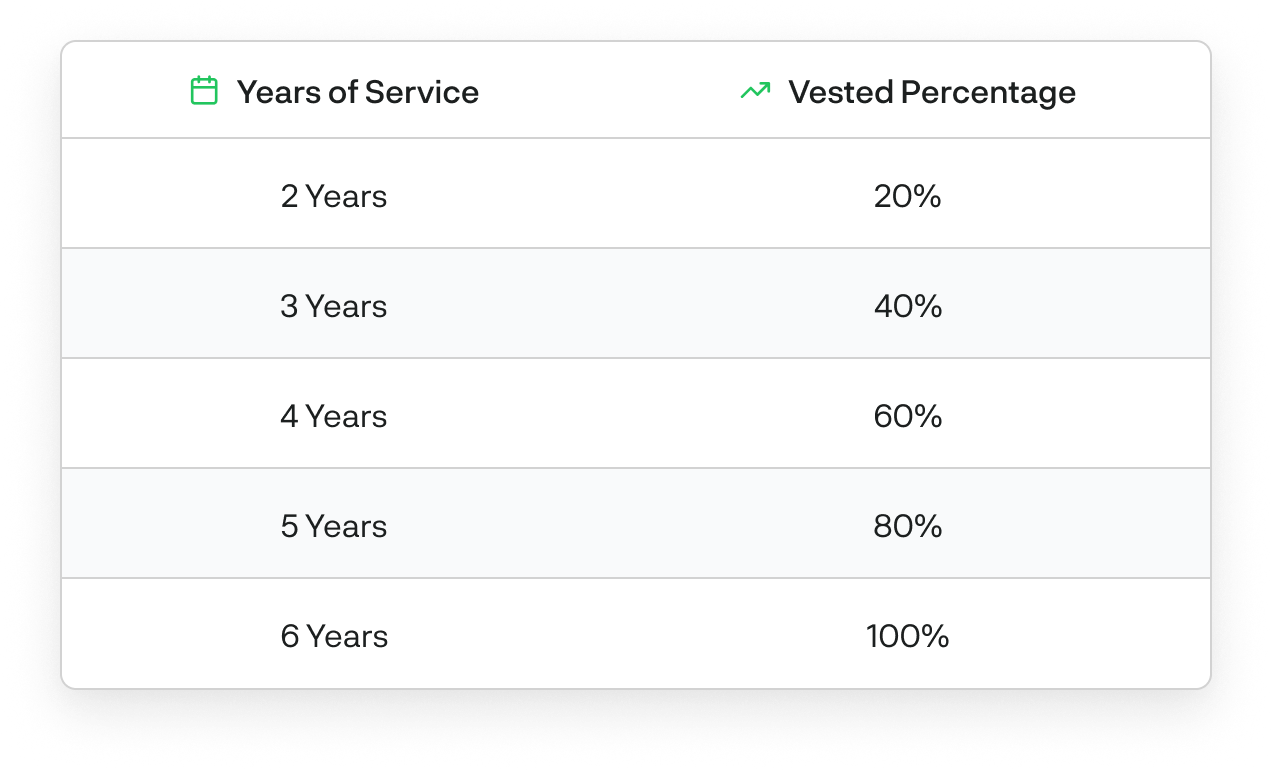
Graded vesting means that contribution ownership gradually increases over time for employees as their tenure grows, until they eventually reach 100%. This is used as a progressive rewarding system, so employees don’t have to wait on a single milestone.
A typical grading schedule may look like this:
How Vesting Varies Based on Plan Types
Vesting isn’t one-size-fits-all, and how a schedule is applied often depends on the type of 401(k) an employer chooses.
Traditional 401(k) Plans
More design flexibility allows for more tailored retention strategies with vesting
Employers typically use cliff or gradual vesting, but can choose immediate vesting if available
Commonly used for both matching and profit-sharing contributions
Safe Harbor 401(k) Plans
Employer contributions are typically 100% immediately vested
The simplicity of the plan helps satisfy certain IRS nondiscrimination test requirements
The trade-off here is less opportunity to use vesting as a retention tool
Solo 401(k) Plans
Because the business owner is also the participant, contributions are always 100% immediately vested
This provides an opportunity for business owners to maximize contributions and tax advantages further, while benefitting from the simplicity of a Solo 401(k)
What Happens Once Funds are Fully Vested?
Again, once employer contributions are fully vested, employees gain ownership of those funds. So:
They cannot be forfeited if an employee leaves their company
The funds will continue to grow in a retirement account
No action is required from the employer at this point, and in most cases, the vesting will automatically happen once the timing threshold is met
Even if employees haven’t met the required years of service yet, they may still benefit from reviewing their vesting schedule, so they understand how their savings will grow over time. This is a great opportunity for employers to educate their employees further with clear communication, user-friendly resources, and ongoing guidance, much of which the right plan provider can help provide.
What to Consider When Designing a Vesting Schedule
Thankfully, with the help of their retirement provider, employers will have the flexibility they need to design a vesting plan that meets their organization where it is while maintaining regulatory guidelines. An important first step is choosing a general timeline. Some businesses choose shorter vesting timelines to offer more immediate benefits while others use longer schedules to motivate long-term retention.
Some key factors to keep in mind that often influence vesting timelines include:
Overall retirement plan strategy
Competitive benefits within the industry
Employee turnover trends
Company size, profitability, and growth plans
Supporting Smarter Plan Design with Vesting
Ultimately, 401(k) vesting goes beyond knowing – it’s about seeing how it enhances retirement plan design to better support both long-term savings and business goals. For employees, vesting provides clarity into their financial future in ways other plan features can’t. And for employers, vesting works as a lever, keeping them competitive in the growing benefits landscape. At Ubiquity, we motivate businesses to utilize vesting, helping them choose their vesting structure and flexible plan design that support their compliance, transparency, and financial growth.
recommended resource
Safe Harbor 401k Guide for Your Small Business
Here’s everything you need to know about elevating your business with a Safe Harbor 401(k) plan.
Designing a 401(k) plan comes with a lot of decisions for employers — contribution types, compliance requirements, and plan features. But one of the most important (and often overlooked) is vesting. A company’s 401(k) vesting schedule can directly influence employee experience and how beneficial a plan is over time for a business.
Here, we’ll take a deep dive into everything 401(k) vesting: how it works, the different types of vesting schedules, and what employers should consider when designing their plan.
What is Vesting in a 401(k)?
Simply put, vesting refers to the ownership of employer contributions within a 401(k) plan. It’s important to note the difference between employer contributions and salary deferrals though (which are often confused). Employees are always 100% vested in their salary deferrals, meaning the money they contribute from their paychecks immediately belongs to them. On the other hand, employer contributions can either vest immediately or gradually over time, depending on the structure of the retirement plan and the chosen vesting schedule.
How Vesting is Benefitting Employers (and Their Teams)
From a plan design perspective, vesting plays an important role as it can support several business goals like:
Increasing employee retention
Rewarding long-term workers with more incentives
Structuring retirement benefits in a clearer, more sustainable way
Aligning benefits with broader workforce needs and wellness
And on the employee side, allowing ownership of employer contributions over time provides them a reward for staying at their company while building their retirement savings.
Common Types of 401(k) Vesting Schedules
401(k) vesting generally falls under three types: immediate, cliff, and graded, and have differing benefits to how employers and employees are incentivized.
Immediate Vesting
Immediate vesting is exactly what it sounds like. Employees own 100% of their employer contributions as soon as their paychecks are de
Cliff Vesting
With cliff vesting, employees become fully vested after working at their company for a specific number of years. For example, an employee might get 100% of their contributions after three years of service. If they leave their company before reaching that milestone, they may have to forfeit those contributions.
Graded Vesting
Graded vesting means that contribution ownership gradually increases over time for employees as their tenure grows, until they eventually reach 100%. This is used as a progressive rewarding system, so employees don’t have to wait on a single milestone.
A typical grading schedule may look like this:
How Vesting Varies Based on Plan Types
Vesting isn’t one-size-fits-all, and how a schedule is applied often depends on the type of 401(k) an employer chooses.
Traditional 401(k) Plans
More design flexibility allows for more tailored retention strategies with vesting
Employers typically use cliff or gradual vesting, but can choose immediate vesting if available
Commonly used for both matching and profit-sharing contributions
Safe Harbor 401(k) Plans
Employer contributions are typically 100% immediately vested
The simplicity of the plan helps satisfy certain IRS nondiscrimination test requirements
The trade-off here is less opportunity to use vesting as a retention tool
Solo 401(k) Plans
Because the business owner is also the participant, contributions are always 100% immediately vested
This provides an opportunity for business owners to maximize contributions and tax advantages further, while benefitting from the simplicity of a Solo 401(k)
What Happens Once Funds are Fully Vested?
Again, once employer contributions are fully vested, employees gain ownership of those funds. So:
They cannot be forfeited if an employee leaves their company
The funds will continue to grow in a retirement account
No action is required from the employer at this point, and in most cases, the vesting will automatically happen once the timing threshold is met
Even if employees haven’t met the required years of service yet, they may still benefit from reviewing their vesting schedule, so they understand how their savings will grow over time. This is a great opportunity for employers to educate their employees further with clear communication, user-friendly resources, and ongoing guidance, much of which the right plan provider can help provide.
What to Consider When Designing a Vesting Schedule
Thankfully, with the help of their retirement provider, employers will have the flexibility they need to design a vesting plan that meets their organization where it is while maintaining regulatory guidelines. An important first step is choosing a general timeline. Some businesses choose shorter vesting timelines to offer more immediate benefits while others use longer schedules to motivate long-term retention.
Some key factors to keep in mind that often influence vesting timelines include:
Overall retirement plan strategy
Competitive benefits within the industry
Employee turnover trends
Company size, profitability, and growth plans
Supporting Smarter Plan Design with Vesting
Ultimately, 401(k) vesting goes beyond knowing – it’s about seeing how it enhances retirement plan design to better support both long-term savings and business goals. For employees, vesting provides clarity into their financial future in ways other plan features can’t. And for employers, vesting works as a lever, keeping them competitive in the growing benefits landscape. At Ubiquity, we motivate businesses to utilize vesting, helping them choose their vesting structure and flexible plan design that support their compliance, transparency, and financial growth.
Watch on-demand
Enter a few of your details below to view the webinar
Thank you!
Your submission has been received! Now you can watch the webinar on-demand by clicking the button below.
Designing a 401(k) plan comes with a lot of decisions for employers — contribution types, compliance requirements, and plan features. But one of the most important (and often overlooked) is vesting. A company’s 401(k) vesting schedule can directly influence employee experience and how beneficial a plan is over time for a business.
Here, we’ll take a deep dive into everything 401(k) vesting: how it works, the different types of vesting schedules, and what employers should consider when designing their plan.
What is Vesting in a 401(k)?
Simply put, vesting refers to the ownership of employer contributions within a 401(k) plan. It’s important to note the difference between employer contributions and salary deferrals though (which are often confused). Employees are always 100% vested in their salary deferrals, meaning the money they contribute from their paychecks immediately belongs to them. On the other hand, employer contributions can either vest immediately or gradually over time, depending on the structure of the retirement plan and the chosen vesting schedule.
How Vesting is Benefitting Employers (and Their Teams)
From a plan design perspective, vesting plays an important role as it can support several business goals like:
Increasing employee retention
Rewarding long-term workers with more incentives
Structuring retirement benefits in a clearer, more sustainable way
Aligning benefits with broader workforce needs and wellness
And on the employee side, allowing ownership of employer contributions over time provides them a reward for staying at their company while building their retirement savings.
Common Types of 401(k) Vesting Schedules
401(k) vesting generally falls under three types: immediate, cliff, and graded, and have differing benefits to how employers and employees are incentivized.
Immediate Vesting
Immediate vesting is exactly what it sounds like. Employees own 100% of their employer contributions as soon as their paychecks are de
Cliff Vesting
With cliff vesting, employees become fully vested after working at their company for a specific number of years. For example, an employee might get 100% of their contributions after three years of service. If they leave their company before reaching that milestone, they may have to forfeit those contributions.
Graded Vesting
Graded vesting means that contribution ownership gradually increases over time for employees as their tenure grows, until they eventually reach 100%. This is used as a progressive rewarding system, so employees don’t have to wait on a single milestone.
A typical grading schedule may look like this:
How Vesting Varies Based on Plan Types
Vesting isn’t one-size-fits-all, and how a schedule is applied often depends on the type of 401(k) an employer chooses.
Traditional 401(k) Plans
More design flexibility allows for more tailored retention strategies with vesting
Employers typically use cliff or gradual vesting, but can choose immediate vesting if available
Commonly used for both matching and profit-sharing contributions
Safe Harbor 401(k) Plans
Employer contributions are typically 100% immediately vested
The simplicity of the plan helps satisfy certain IRS nondiscrimination test requirements
The trade-off here is less opportunity to use vesting as a retention tool
Solo 401(k) Plans
Because the business owner is also the participant, contributions are always 100% immediately vested
This provides an opportunity for business owners to maximize contributions and tax advantages further, while benefitting from the simplicity of a Solo 401(k)
What Happens Once Funds are Fully Vested?
Again, once employer contributions are fully vested, employees gain ownership of those funds. So:
They cannot be forfeited if an employee leaves their company
The funds will continue to grow in a retirement account
No action is required from the employer at this point, and in most cases, the vesting will automatically happen once the timing threshold is met
Even if employees haven’t met the required years of service yet, they may still benefit from reviewing their vesting schedule, so they understand how their savings will grow over time. This is a great opportunity for employers to educate their employees further with clear communication, user-friendly resources, and ongoing guidance, much of which the right plan provider can help provide.
What to Consider When Designing a Vesting Schedule
Thankfully, with the help of their retirement provider, employers will have the flexibility they need to design a vesting plan that meets their organization where it is while maintaining regulatory guidelines. An important first step is choosing a general timeline. Some businesses choose shorter vesting timelines to offer more immediate benefits while others use longer schedules to motivate long-term retention.
Some key factors to keep in mind that often influence vesting timelines include:
Overall retirement plan strategy
Competitive benefits within the industry
Employee turnover trends
Company size, profitability, and growth plans
Supporting Smarter Plan Design with Vesting
Ultimately, 401(k) vesting goes beyond knowing – it’s about seeing how it enhances retirement plan design to better support both long-term savings and business goals. For employees, vesting provides clarity into their financial future in ways other plan features can’t. And for employers, vesting works as a lever, keeping them competitive in the growing benefits landscape. At Ubiquity, we motivate businesses to utilize vesting, helping them choose their vesting structure and flexible plan design that support their compliance, transparency, and financial growth.
Get your guide
Enter your details below to download your free PDF now
Thank you!
Your submission has been received! Now you can download the guide by clicking the button below.